Trailline Command Lensatic Compass - Military Green
3 sold in last 24 hours
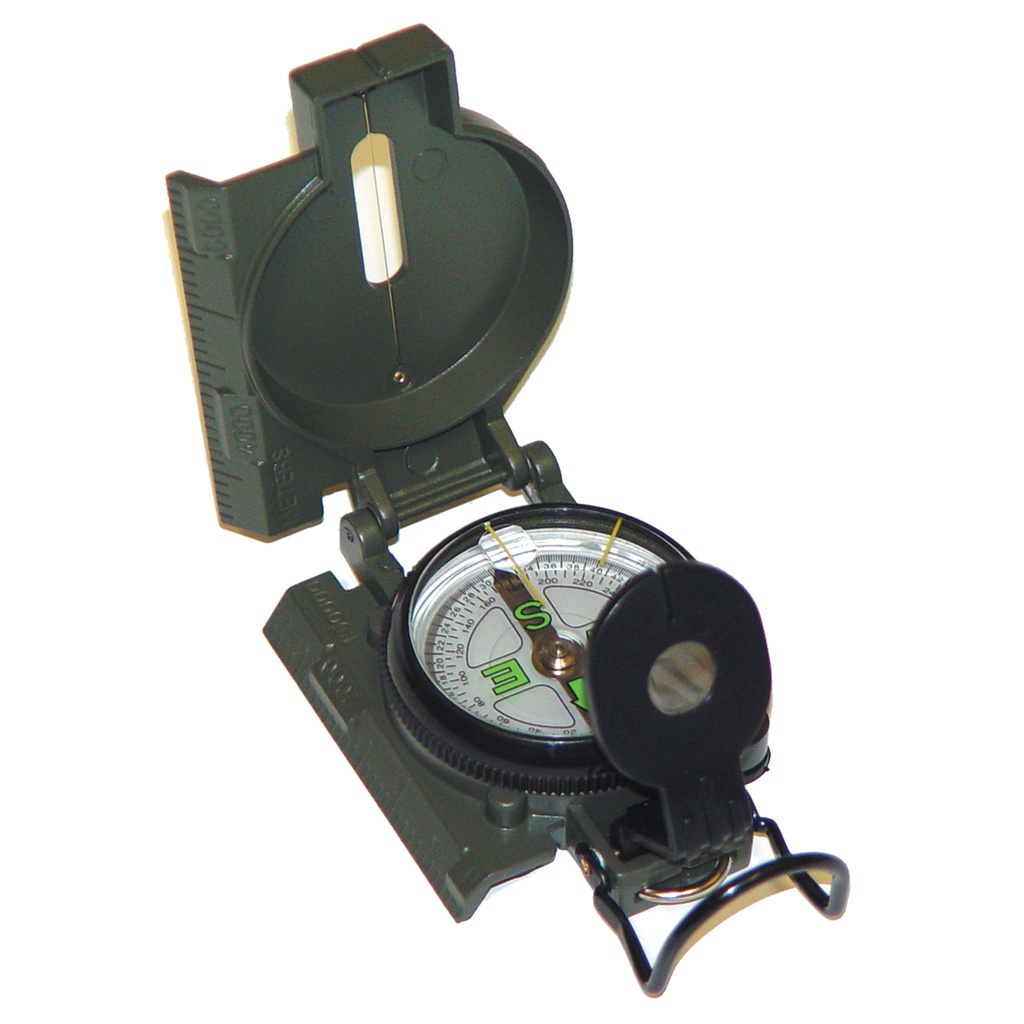
A reliable compass quietly changes how you move outdoors. The Trailline Command Lensatic Compass uses a metal military green body, 2-inch dial, and precise sighting system to give you clear, confident bearings when the path isn’t obvious. The clicking bezel and 1:50,000 map scale turn maps into real decisions in the field. Fold it, clip a finger through the thumb ring, and you have a compact navigation tool that feels steady in the hand and sure in its direction.
When the Trail Fades, Your Direction Doesn’t Have To
There’s a moment on almost every hike, field exercise, or land-nav course when the path stops doing the work for you. The trees close in, the landmarks vanish, or the route on the map doesn’t quite match what’s under your boots. That’s where a solid lensatic compass shifts the balance back to you. The Trailline Command Lensatic Compass - Military Green is built for those moments — not to make you fearless, but to make you prepared, calm, and clear on where you’re going.
Field-Ready Lensatic Compass for Real Navigation
This isn’t a keychain trinket or a novelty gadget. It’s a full metal, military-style lensatic compass designed for real field navigation. The military green housing protects a 2-inch dial with clear degree markings, a rotating clicking bezel, and a sighting system that lets you line up a distant point with precision. Whether you’re hiking, training, or learning land navigation for the first time, this compass is made to be used, not just carried.
Metal Housing Built for Rough Ground
The metal body in matte military green feels solid in your hand without being heavy. It closes over the dial to protect it in your pack or pocket, and the folding thumb ring gives you a secure, repeatable grip for sighting bearings. If you’re crossing uneven ground, scrambling over rocks, or working in gear-heavy environments, this is the kind of compass you can toss into a bag and trust to come out ready to work.
Lensatic Sighting for Precise Bearings
The lensatic design uses three elements — the sighting wire in the lid, the rear sight with magnifying lens, and the dial — to help you take accurate azimuths. Instead of guessing at a direction, you line up the wire with a landmark, read the dial through the lens, and move with confidence. It’s a simple, proven system that rewards a bit of practice with very real accuracy on the ground.
Practical Features That Make Navigation Easier
Good navigation isn’t about memorizing technical specs. It’s about tools that make decisions in the field more straightforward. Every feature on this lensatic compass supports that goal.
Clear Dial, Clicking Bezel, and Map Scale
The 2-inch dial gives you enough space for legible degree markings without making the compass bulky. The black bezel ring clicks as it rotates, letting you set a bearing or mark a reference without constantly re-checking the numbers. A 1:50,000 map scale helps you translate the lines on your map into the terrain under your feet, turning topographic details into practical route choices instead of guesswork.
Thumb Ring Grip for Steady Use
The folding thumb ring isn’t just a visual cue — it’s a stability tool. Slide your thumb through the ring, rest the body in your palm, and you have a consistent, steady platform for holding the compass level. That steadiness translates into more reliable bearings, which is especially useful for beginners learning proper technique or for anyone working in cold, wet, or gloved conditions.
How to Carry and Use This Compass with Confidence
Like any good piece of outdoor gear, a lensatic compass works best when it has a clear place in your setup and you have a simple routine for using it. This compass is compact enough to live in a jacket pocket, cargo pocket, or top brain of a pack, so it’s accessible when you actually need it.
Carrying in the Field
- Pocket carry: Folded closed, it rides comfortably in a thigh or chest pocket without sharp edges catching on fabric.
- Belt or harness: The thumb ring can anchor to a small carabiner or lanyard if you prefer it tethered to webbing or a chest rig.
- Pack-ready: Its metal housing and protective lid mean it can sit beside other gear without babying it.
Whichever carry method you choose, the goal is consistent access: you should be able to reach the compass, open it, and have it level in your hand in a few seconds without thinking about it.
Basic Use: From Map to Ground
You don’t need to be a seasoned navigator to get value from this compass. Start with a simple, reliable workflow:
- Open the lid to about 90 degrees and raise the rear sight and lens.
- Slip your thumb through the ring and brace the body in your palm.
- Choose a landmark roughly in your intended direction.
- Align the sighting wire with that landmark.
- Look through the rear lens and read the dial where the index line crosses it.
- Use the clicking bezel to mark that bearing if you want to hold it while you move.
With a bit of practice, this sequence becomes second nature. The aim isn’t perfection; it’s confidence that the direction you’ve chosen is intentional, not random.
Why a Lensatic Compass Still Matters in a GPS World
GPS devices and phones are powerful tools, but they rely on batteries, signal, and electronics behaving well. A lensatic compass like this one is a quiet backup that works when those systems don’t. More importantly, it trains your own sense of direction and decision-making. Knowing how to take a bearing and follow it builds a different kind of confidence — one that doesn’t vanish when a screen goes dark.
For hikers, scouts, cadets, and anyone building outdoor skills, this kind of compass isn’t about rejecting technology; it’s about adding a layer of self-reliance underneath it.
Questions People Ask About This Lensatic Compass
How far can I reliably use the sighting system?
The lensatic sighting system on this compass is practical and effective for lining up bearings on landmarks from a few dozen yards away to the visible horizon. You’re not limited by electronics — if you can see the point you’re aiming at, you can take a bearing on it. In wooded or urban environments, that might mean choosing nearer reference points like a distinct tree or building edge; in open terrain, you can use distant hilltops or ridgelines. The key is picking something you can clearly see and then reading the dial carefully through the lens.
Will this compass interfere with or be affected by nearby metal?
Like all magnetic compasses, this one can be thrown off if you hold it too close to steel objects or strong magnets. That includes things like vehicles, rifles, metal fences, or even some packs with heavy hardware. The fix is simple and practical: when taking a bearing, step a small distance away from large metal objects and hold the compass at chest or waist height, clear of anything that could influence the needle. With that small habit, you protect the accuracy you’re relying on.
Is this compass suitable for learning land navigation?
Yes. In fact, its lensatic design, map scale, and clear markings make it a strong fit for anyone learning the fundamentals. It teaches you the same skills used in many military and search-and-rescue contexts: taking an azimuth, following a bearing, and relating map features to the ground. If you’re teaching a younger hiker, training for ROTC-style activities, or simply wanting to feel more self-sufficient outdoors, this compass gives you a straightforward platform to practice on.
How do I maintain and store it so it lasts?
Maintenance is minimal but meaningful. Keep the hinge, bezel, and lens free of grit by occasionally brushing or wiping them clean. If it gets wet, dry it before long-term storage to protect the metal housing. Store it closed in a pocket, pouch, or drawer where the dial is shielded, and avoid leaving it directly on or next to strong magnets for extended periods. With these simple habits, a compass like this can stay serviceable for years of trips and training.
Carrying This Compass Is a Quiet Form of Confidence
Owning a solid lensatic compass doesn’t turn you into a different person overnight — and it doesn’t need to. What it does offer is a calm, practical kind of confidence: if the trail isn’t obvious, if the app glitches, if the map feels confusing, you have a clear, manual way to choose a direction and stick to it. Over time, that changes how you move outdoors. You’re not hoping everything goes right; you’re prepared to navigate when things get a little uncertain.
The Trailline Command Lensatic Compass - Military Green is a small, durable tool that supports that mindset. It meets you where you are, whether you’re just starting to learn bearings or you’ve carried a compass for years, and helps you take the next step with more clarity and less doubt. That steady sense of direction — both literal and metaphorical — is something you earn, one bearing at a time.