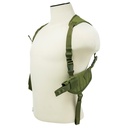
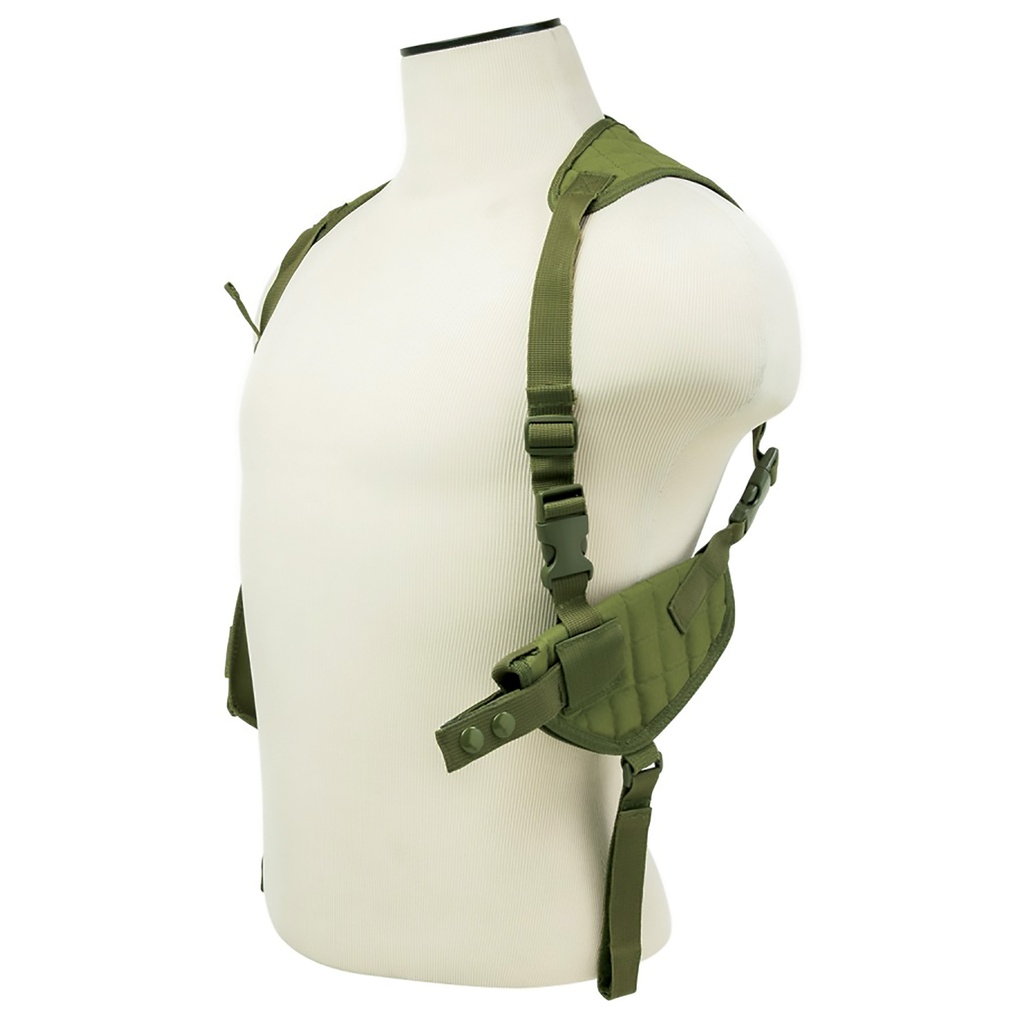
Ranger Balance Cross-Draw Shoulder Holster - OD Green
9 sold in last 24 hours
This ambidextrous shoulder holster is built for people who take responsible carry seriously. A horizontal cross‑draw keeps your motion natural, while the four‑point elastic harness spreads weight so all‑day wear feels steady instead of tiring. The opposite‑side double mag pouch balances the rig and keeps backup within easy reach. Adjust for right or left‑hand draw, dial in the strap length, and secure it to your belt for confident, consistent access—under a jacket, on the range, or during long shifts.
When Your Holster Works With You, Not Against You
Carrying regularly—whether on the range, on duty, or under a light jacket—should feel steady, not stressful. The Ranger Balance Cross-Draw Shoulder Holster - OD Green is designed for people who want their gear to move with them, keep weight balanced, and make access feel natural instead of forced. This shoulder holster doesn’t try to turn you into someone you’re not; it simply supports the safety habits you’ve already decided to build.
With a horizontal cross-draw orientation, ambidextrous setup, and a double magazine pouch opposite the holster, this rig is about quiet confidence: your sidearm and spare mags are right where you expect them to be, every time you reach.
Ranger Shoulder Holster Design: Built for Real-World Carry
At its core, this is a tactical shoulder holster designed for practical, everyday use—not a showpiece. The OD green finish and clean lines match other field gear, but the real value is in how it fits, balances, and carries.
Four-Point Harness for Even Weight Distribution
The four-point elastic harness is engineered to spread weight across your shoulders instead of letting it dig into a single point. That means less fatigue and fewer hot spots during long wear, whether you’re standing post, walking a property line, or spending the afternoon on the range. Elastic sections allow the shoulder holster to flex as you move, so your draw stroke stays consistent without constant re-adjustment.
Balanced by a Double Magazine Pouch
On the side opposite the holster, a double magazine pouch helps counterbalance the weight of your firearm. This balance matters. Instead of your rig pulling to one side, the shoulder holster rests more evenly, which makes concealment smoother and helps your jacket or overshirt hang naturally. It also means your reloads are stored where you can reach them quickly and calmly.
Ambidextrous, Adjustable Holster: Confidence in the Fit
A shoulder holster only builds confidence if it fits your body and your habits. This system gives you the flexibility to dial it in for how you actually carry.
Right- or Left-Hand Carry Without Rebuying Gear
The ambidextrous design allows you to set up the shoulder holster for right- or left-hand draw. That makes it a smart option if you train both sides, share gear, or simply want the freedom to change your setup over time. You’re not locked in; the rig adjusts to you.
Strap Adjustments and Belt Tie-Down
Adjustable webbing straps let you raise or lower the holster body and magazines so they sit where your hands naturally fall. A lower tie-down strap connects the holster to your belt line for added stability. With that anchor in place, the holster stays put through normal movement—drawing, reaching, or bending—so when you need a consistent grip, it’s there.
How This Shoulder Holster Supports Practical, Everyday Carry
Carrying a firearm is a serious responsibility, and your holster should support that responsibility with predictable, repeatable behavior. This shoulder holster is built to integrate into your daily routine without demanding attention every few minutes.
Horizontal Cross-Draw That Feels Natural
The horizontal orientation means your draw path follows a more natural, cross-body motion. For many users—especially when seated in a vehicle, at a desk, or on long drives—this can feel more accessible than strong-side waistband carry. The design is intentionally low-profile, so it rides under a jacket or overshirt with minimal printing when properly adjusted and matched with appropriate clothing.
Retention Strap with Dual Snaps
A retention strap with dual snap buttons helps secure your firearm until you intentionally release it. That added retention is especially valuable during active movement or long hours of wear. With consistent practice, unsnapping becomes part of a smooth, controlled draw. The goal is simple: secure when it should be, accessible when it needs to be.
Carrying Responsibly: Making This Rig Work for You
A good shoulder holster is about more than the hardware—it’s also about how you set it up and how you use it. This rig is designed to make those steps straightforward so you can focus on safe habits.
Dialing In Your Fit
Start by adjusting the four-point harness so the shoulder pads sit comfortably and the holster body rests just below your natural ribcage line. From there, fine-tune the webbing so the grip of your firearm sits where your hand naturally falls when you reach across your body. Attach the belt tie-down strap so the holster remains stable when you move, but without pulling your jacket or overshirt out of place. It’s worth taking a few minutes to get this right; that investment pays you back every time you carry.
Training Your Draw and Re-Holster
Once adjusted, practice your draw and re-holster with an unloaded firearm in a safe environment. Focus on three things: clearing your cover garment, releasing the retention strap, and building a smooth cross-draw motion that stays controlled the whole way through. The more familiar you become with how this shoulder holster moves with you, the more natural and confident your carry will feel.
Questions People Ask About This Shoulder Holster
How far does this shoulder holster ride from the body?
This shoulder holster is designed to ride relatively close to the body for a balance of concealment and access. The horizontal holster body sits snugly under the arm, with the harness and tie-down helping to keep it tucked in instead of swinging outward. Final ride height and distance from the body depend on how you adjust the straps, your body shape, and your cover garment, but the overall design aims for a low-profile, stable carry.
Is this shoulder holster legal to carry?
Holsters themselves are generally legal to purchase and own in most states; the legal considerations usually apply to how and where you carry your firearm. Concealed carry, open carry, vehicle carry, and duty carry rules all vary by state and sometimes by city or county. Before using this shoulder holster in public, check your local and state laws regarding concealed carry permits, reciprocity, and any location-specific restrictions. When in doubt, consult your state’s official resources or a qualified legal professional. This rig is a tool; using it responsibly within your local laws is what keeps you protected in every sense of the word.
How do I use a shoulder holster effectively and safely?
Effective use starts with three pillars: fit, training, and awareness. First, adjust the harness and tie-down so the holster is stable and your grip is easy to reach. Second, practice clearing your cover garment, releasing the retention strap, and drawing with a steady, controlled motion—always with an unloaded firearm in a safe direction until your movements are consistent. Third, stay aware of your surroundings and your own body language; responsible carry means your firearm remains discreet, secure, and under your conscious control at all times. This shoulder holster is designed to support those habits, not replace them.
Owning Your Setup, Owning Your Confidence
Choosing a shoulder holster like the Ranger Balance Cross-Draw Shoulder Holster - OD Green is a way of saying, "I’m taking my responsibility seriously, and I want gear that helps me do that well." The four-point harness, ambidextrous setup, horizontal draw, and balanced mag pouches all work together to create a carry system that feels steady, predictable, and ready for the routines you live every day.
With the right adjustment and practice, this isn’t just another piece of tactical gear—it becomes part of a calm, capable approach to personal safety. You’re not relying on hope or improvisation; you’ve chosen a holster that supports your training, your judgment, and your commitment to carrying with intention.