Field Scout Sighting Lensatic Compass - Black & Gold
4 sold in last 24 hours
When the trail fades or your phone loses signal, a reliable lensatic compass turns uncertainty into direction. The Field Scout Sighting Lensatic Compass slips into any pocket or pack, then flips open to bold, easy‑to‑read markings and a steady thumb loop grip. Use the sighting wire and lens to lock in a bearing, confirm it at a glance, and move with quiet confidence. It’s a compact navigation tool that earns its place in hiking kits, glove boxes, and emergency gear.
When the Path Blurs, This Compass Brings You Back to Center
Out on a trail, crossing a field, or checking a map at dusk, it only takes a moment for direction to feel uncertain. That feeling is human. What matters is what you reach for next. The Field Scout Sighting Lensatic Compass - Black & Gold is built for that exact moment: a compact navigation tool that turns "I’m not sure" into a clear bearing you can trust.
This isn’t about being perfect with navigation. It’s about having a simple, dependable compass in your pocket so you can pause, orient, and move on with confidence.
Lensatic Compass Design for Practical, Real-World Navigation
The Field Scout is a classic lensatic compass designed for people who want reliable direction without extra bulk or complexity. Its folding cover, sighting wire, and lens work together to help you take accurate bearings in the field, even if you’re not an expert navigator.
Clear Sighting System: Wire + Lens
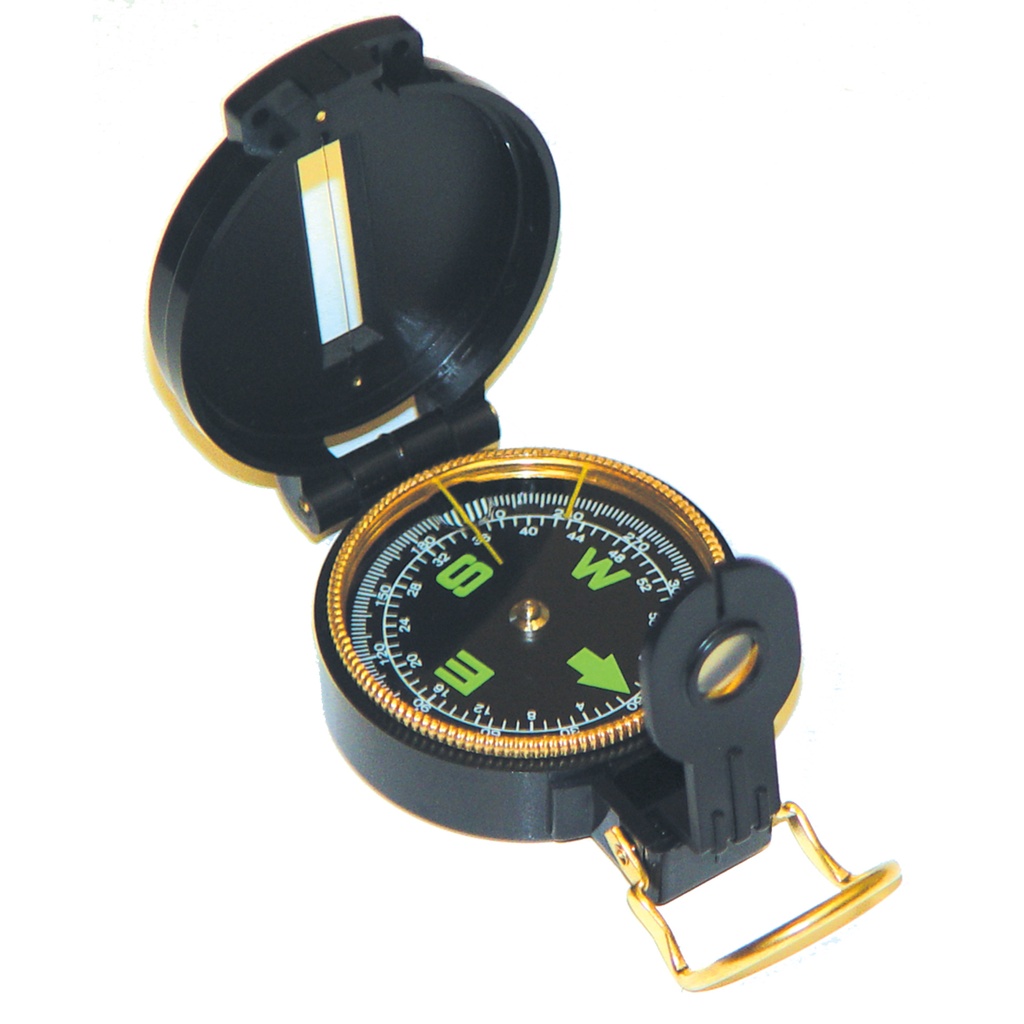
The front of the compass lid holds a fine sighting wire, aligned with the bold index lines on the dial. When you raise the compass toward a landmark and look through the small sighting lens, you can line up the wire and the object you’re navigating toward. That gives you a bearing you can see clearly through the magnified lens, so you’re not guessing at tiny numbers.
Thumb Loop Stability in a Compact Form
A folding gold-tone thumb loop at the base lets you steady the compass in one hand. You hook your thumb, brace your hand against your body, and the dial settles quickly. That stability matters when you’re trying to read a bearing in wind, on uneven ground, or while wearing gloves.
Why This Pocket Lensatic Compass Works in the Field
A navigation tool earns its place by being there when you need it and staying straightforward under stress. The Field Scout Sighting Lensatic Compass focuses on the essentials that actually matter outside.
High-Contrast Dial for Fast Reading
The black dial is printed with bright green cardinal letters and white degree markings. That contrast makes it easier to read bearings in low light or shaded woods, where glare and shadows can make finer markings disappear. You don’t need perfect conditions to see where you’re headed.
Rugged Black Housing with Gold Accents
The matte black housing resists visual wear and blends easily into outdoor gear, while the gold-tone bezel and loop add visible touchpoints so you can find and handle the compass quickly. It looks like what it is: a field-ready lensatic compass built to ride in your pocket, pack, or glove box without demanding attention until you need it.
Easy to Carry, Easy to Add to Any Kit
Because this is a pocket lensatic compass, it’s designed to be with you, not left at home. The folding cover protects the dial and sighting wire, so you can drop it into a pocket or pouch without worrying about damage.
- Pocket-ready size: Compact enough for a jeans pocket or shirt pocket
- Lightweight build: Adds guidance, not bulk, to your hiking or emergency kit
- Folded protection: Hinged lid closes over the dial and sighting wire
It’s a simple addition to daypacks, scouting gear, glove boxes, and home emergency supplies—a small piece of preparation that quietly raises your overall readiness.
How to Use This Lensatic Compass for Confident Navigation
You don’t need military training to use a lensatic compass effectively. With a few simple habits, the Field Scout Sighting Lensatic Compass becomes a calm, practical tool you can rely on.
Basic Steps to Take a Bearing
- Open the lid to about 90 degrees and raise the compass to eye level.
- Slip your thumb through the loop to stabilize your hand.
- Look through the sighting lens, aligning the wire on the lid with a distant landmark.
- While keeping the landmark lined up, glance at the dial through the lens to read the degree marking.
- Note that bearing mentally or in your notebook, then lower the compass and walk, checking as needed.
With a map, you can match that bearing to your route, but even without one, you can use the bearing to maintain a steady direction across open ground or through trees.
Using the Compass with a Map
If you’re pairing this lensatic compass with a paper map, it becomes a bridge between the landscape and your plan. You can:
- Use the edge of the closed compass as a straight line to mark routes.
- Align the dial with map north and then rotate the map to match the real world.
- Transfer bearings from landmarks on the ground to lines on your map.
This isn’t about perfection; it’s about having a grounded way to keep track of where you are and where you’re headed.
Reliable Direction for Hikers, Scouts, and Preparedness Kits
The Field Scout Sighting Lensatic Compass is a natural fit for day hikers, weekend campers, scout groups, and anyone building a practical emergency kit. Phones are extraordinary tools, but they rely on batteries, signals, and software. A lensatic field compass like this one relies on the Earth’s magnetic field—a quiet, steady constant you can tap into anytime.
Whether you’re teaching basic navigation to a younger hiker, adding redundancy to your own kit, or stocking gear for a group, this compass supports a simple, empowering skill: knowing where you are and what direction you’re choosing to go.
Questions People Ask About Lensatic Compasses
How accurate is this lensatic compass?
For everyday hiking, scouting, and preparedness use, this lensatic compass provides practical accuracy you can trust. The sighting wire and lens help you lock onto landmarks and read a clear bearing, while the thumb loop improves stability. It’s designed for field navigation and basic land nav skills, not fine scientific measurement—and for most people, that’s exactly what’s needed.
Is a lensatic compass hard to learn?
It can look technical at first glance, but the core motions are simple: point at what you’re walking toward, line up the sighting wire, and read the number through the lens. With a bit of practice around home or on familiar trails, it becomes a calm, almost automatic habit. The design of this compass supports that learning curve with bold markings and a steady grip.
Where should I keep this compass so it’s actually useful?
The best compass is the one you have on you. Many people keep this pocket lensatic compass in a daypack’s top pocket, a hiking jacket, a glove box, or a dedicated emergency kit. Because it’s compact and protected when folded, it doesn’t demand much space, which makes it easier to keep it with you instead of stored away.
Does this compass need batteries or charging?
No. This lensatic compass is purely mechanical and magnetic. That’s one of its strengths: it’s always ready, regardless of signal strength, battery level, or weather. As long as you keep it away from strong magnets or fields that could temporarily affect the needle, it remains a dependable backup to digital tools.
Owning This Compass as a Quiet Act of Preparedness
Choosing a lensatic compass like the Field Scout Sighting Lensatic Compass - Black & Gold is a small, grounded way of saying: "I take my navigation and preparedness seriously, without drama." It doesn’t replace your phone or GPS; it complements them with a simple, durable, always‑ready backup.
Slip it into your pack, practice with it on low‑stakes walks, and let your confidence build. Over time, this compact compass becomes more than a tool—it becomes a quiet reminder that you have options, even when the trail blurs and the map goes silent.