Duty-Bred Army Combatives Training Manual - Yellow
15 sold in last 24 hours
Personal protection starts long before a confrontation. This Army combatives training manual gives you a step-by-step roadmap for building real hand-to-hand confidence, drawn from authentic 1992 field doctrine. You get rifle-bayonet and empty-hand techniques organized into clear, teachable progressions—ideal for instructors, training groups, or serious solo study. It’s a quiet, no-drama way to deepen your skills so that, if life ever tests you, you’re not starting from zero—you’re responding with practiced, grounded capability.
When Combatives Training Turns Uncertainty Into Capability
There’s a moment in anyone’s personal protection journey when you realize that tools are only part of the story. Pepper spray, alarms, and hardware matter—but so does what your body can do when your heart rate spikes and your fine motor skills disappear. This Army combatives training manual exists for that moment. It’s not about becoming someone you’re not. It’s about knowing that, if a situation ever turns physical, you’ve built real, practiced responses into your body.
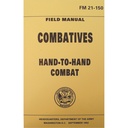
The Duty-Bred Army Combatives Training Manual - Yellow is a faithful reprint of the 1992 field manual FM 21-150. It was written to give soldiers clear, usable hand-to-hand skills under stress. Today, it serves anyone serious about personal safety, from instructors to everyday people rebuilding their confidence through structured, realistic training.
Official Army Combatives, Adapted to Real-World Self-Defense
This is not a flashy martial arts book or a collection of exotic techniques. It’s an Army field-tested combatives manual built on simple, repeatable movements designed to work when you’re tired, scared, or overloaded. That same clarity translates well for civilian self-defense training, especially when paired with tools like pepper spray for self defense as part of a broader safety strategy.
Inside, you’ll find rifle-bayonet fighting, standing grappling, strikes, and ground techniques broken into logical layers. Instead of overwhelming you with options, the manual teaches you how range, position, and balance determine what’s realistic in a given moment. That perspective alone can be deeply calming: you’re no longer guessing what might work—you’re learning what’s most likely to work, and why.
Doctrine-True Structure You Can Trust
Because this combatives manual is drawn from official 1992 Army doctrine, it reflects a tested sequence: fundamentals, positional control, finishing actions, and progressive training drills. For instructors, that means a ready-to-run curriculum. For individual readers, it means you can follow a sensible path from basic movements to more advanced applications without feeling lost.
Built for Stress, Not Just the Classroom
The techniques here were selected with battlefield conditions in mind: low visibility, gear interference, fatigue, and fear. That same selection pressure makes this combatives guide highly relevant for real-world self-defense contexts—where you may be surprised, disoriented, or in tight spaces. The goal is not perfection; it’s functional, repeatable responses you can recall when it counts.
How This Combatives Manual Fits Into Your Personal Protection Plan
Modern personal safety is layered. You might carry pepper spray for self defense, set up better lighting around your home, or change your routines to feel more secure. A combatives training manual adds another layer: the ability to use your body effectively if distance closes or your primary tools aren’t available.
Think of it as a bridge between theory and action. Reading alone won’t make you proficient—but it gives you a precise language, step-by-step progressions, and a shared framework you can bring to a class, training partner, or study group. It’s a structure that helps you convert concern into skill-building, one drill at a time.
Supporting, Not Replacing, Defensive Tools
This manual doesn’t ask you to choose between combatives and tools like the best pepper spray for women or other non-lethal options. Instead, it complements them. You learn how to manage distance, protect your balance, and stay oriented—skills that make it easier to access and deploy defensive tools under pressure, or to escape once a momentary window opens.
From Reading to Practicing: Making It Real
The most empowering way to use this Army combatives guide is to pair it with practice. That might mean:
- Working through a few techniques at a time with a trusted partner
- Bringing the manual to a self-defense or combatives class to deepen what you’re learning
- Creating simple, repeatable home drills around balance, posture, and basic escapes
The goal is not to memorize every page; it’s to build a small core of reliable responses you actually own under stress.
Practical Details: What You’re Getting
The Duty-Bred Army Combatives Training Manual - Yellow is a softcover, English-language reprint of the U.S. Army’s FM 21-150, originally published in September 1992 by Headquarters, Department of the Army in Washington, D.C. The plain yellow cover and official seal reflect its no-frills, training-first purpose.
Content Focus and Structure
You’ll see material on:
- Rifle-bayonet fighting principles and applications
- Hand-to-hand combat fundamentals: stance, movement, and balance
- Strikes, kicks, and counters organized by range
- Standing grappling and throws designed for simplicity
- Ground techniques focused on control, escape, and finishing
- Training progression ideas suitable for units, clubs, and classes
Each section is written in the direct, concise style common to field manuals: minimal fluff, maximum clarity.
Who This Combatives Manual Serves Best
This manual is especially useful if you:
- Teach self-defense, martial arts, or security personnel and want a structured curriculum
- Train in combatives, MMA, or grappling and want to understand Army doctrine
- Are building a personal safety plan that includes both tools and physical skills
- Appreciate authentic military references and want an original-style field manual
Wherever you’re starting from, the tone is the same: direct, practical, and focused on making you more capable, not more frightened.
Questions People Ask About This Combatives Manual
How far does this pepper spray reach?
This particular product is a combatives training book, not a canister of pepper spray, so it doesn’t have a spray range. Many readers do combine this manual with pepper spray for self defense, though, and a typical defensive spray has an effective range of about 8–12 feet. If you carry spray alongside your training, check the actual product label for its listed range and practice accessing it smoothly so it fits cleanly into the distance-management skills you develop from this manual.
Is this pepper spray legal to carry?
This item is a printed combatives field manual, and books like this are legal to own and study in all U.S. states. If you also carry pepper spray or other defensive tools, legality can vary by state and sometimes by city—some jurisdictions limit canister size, formula strength, age of the carrier, or where you can bring it (schools, airplanes, government buildings, etc.). Before you buy or carry, search for “is pepper spray legal in [your state]” using your location, and verify details on an official state or local government site so your safety plan is both effective and compliant.
How do I use pepper spray effectively?
While this is a combatives book, many people pair it with pepper spray for self defense and want a clear, confident answer. Basic best practices include:
- Carry it in a consistent, easily reachable place (not buried in a bag).
- Learn the safety mechanism and practice drawing and aiming with an inert canister.
- Create distance if possible and aim for the eyes and upper face.
- Use short, controlled bursts rather than holding the actuator down continuously.
- Deploy, move off the line, and look for a path to safety immediately.
The combatives skills from this manual can support those steps—helping you manage distance, stay on your feet, and protect your balance so you can either deploy a tool or break away. Together, they create a more complete, layered approach to personal protection.
Stepping Into a More Capable Version of Yourself
Owning the Duty-Bred Army Combatives Training Manual - Yellow is not about preparing for constant danger; it’s about choosing not to leave your physical safety entirely to chance. You’re learning from doctrine designed to work under pressure, then applying it at your own pace, in alignment with your values and your life.
Combined with thoughtful choices—like carrying a well-chosen pepper spray, trusting your intuition, and setting healthy boundaries—this combatives manual becomes one more way you say, “My safety matters.” You stay who you are, just with more options, more understanding, and more practiced responses if life ever asks you to use them.
You’re not becoming paranoid. You’re becoming prepared—and that’s a quiet, steady kind of confidence you carry into every room you enter.